
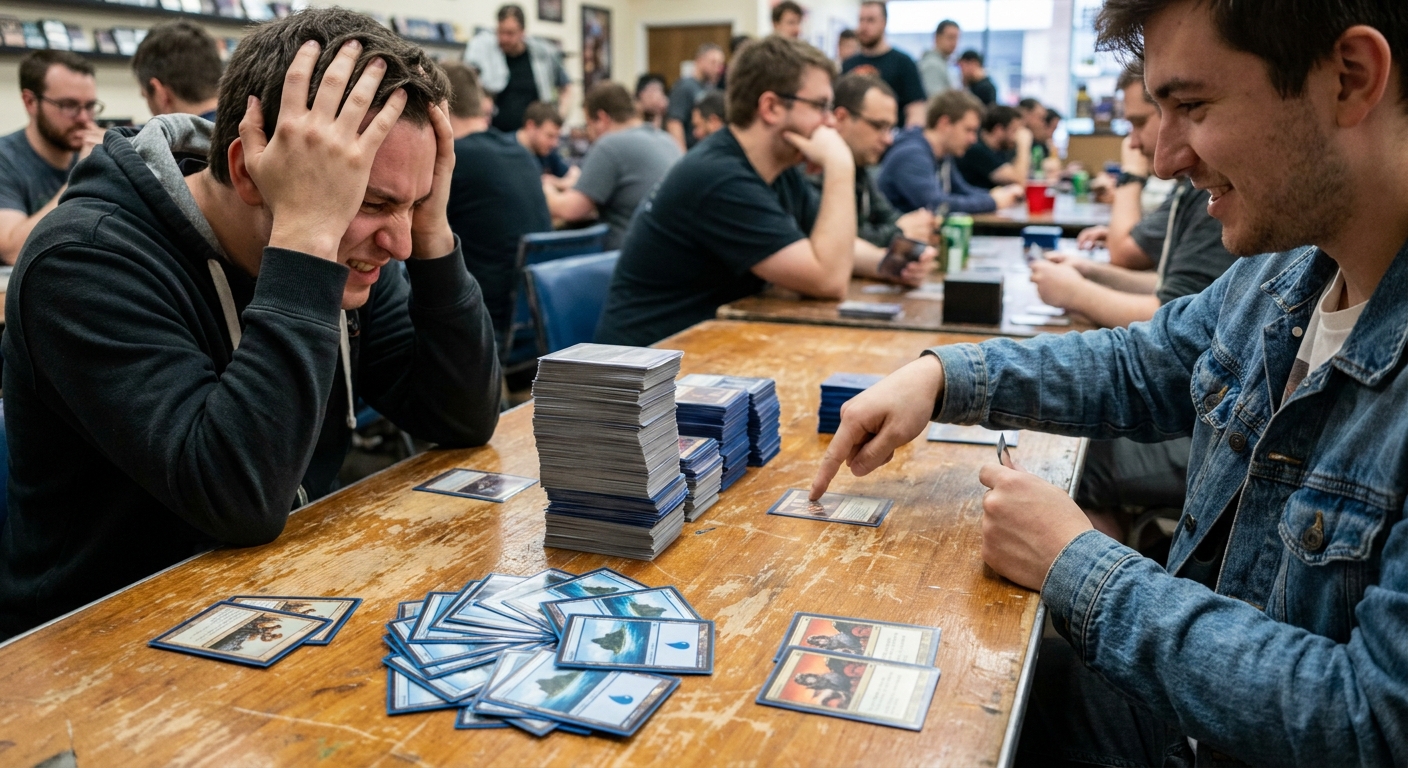
I finally got my hands on the Secret Lair DanDan deck, and after several evenings of head-to-head fish warfare at my kitchen table, I’m ready to declare it: this is the best two-player Magic experience I’ve had since coming back to the game. It’s also the weirdest, and weird needs a guide. So here’s everything you need to know about DanDan — what it is, how it works, and how to actually win — from a dad who’s already lost to his own deck several times.
What on Earth Is DanDan?
DanDan (originally called "Forgetful Fish") is a fan-made format from the mid-90s, invented by a player named Nick Floyd, built around one gloriously mediocre card: Dandân, a 4/1 blue Fish from Magic’s very first expansion in 1993. Wizards gave the format its official blessing with a Secret Lair release earlier this year — a complete, ready-to-play product with a how-to guide and two life wheels in the box.
Here’s the twist that breaks your brain in the best way: both players share ONE 80-card deck. Same library. Same graveyard. You’re not playing against your opponent’s deck — you’re both fishing from the same pond, literally and figuratively. The deck is entirely mono-blue: ten copies of Dandân (the only creature), a pile of Islands, and a toolbox of counterspells, draw spells, and tricky instants.
The Rules in Plain English
Most of it plays like regular Magic: 20 life each, seven-card hands, normal turns. The special rules cover the sharing. Opening hands are dealt like poker — one card to you, one to them, alternating. When a spell makes both players draw, the active player deals the same way. Any card that mentions "your" library or graveyard now means the shared one. And the loss conditions all matter: hit 0 life, take five hits from a 4-power fish, or — critically — lose by drawing from the empty shared library. Milling out is a real, live strategy in this format.
One more rule quirk with huge implications: Dandân itself can’t attack unless the defending player controls an Island — and if you ever control no Islands, your fish dies. Sit with that, because it’s the engine of the whole game.
The Three Mind Games That Make It Sing
The Island dilemma. You need Islands to cast spells. But every Island you play enables their fish to attack you. Every land drop is a tiny negotiation with the future: mana now, vulnerability forever. I’ve never played a format where playing a basic land felt like a decision before. It rules.
The shared-deck information war. This is where the "Forgetful" in Forgetful Fish comes from. The deck runs a fistful of Memory Lapse — a counterspell that puts the countered spell on top of the library. In a normal game that’s tempo; in a shared deck, it means you know exactly what’s coming… and so might they, if they were paying attention. Counting what’s gone to the shared graveyard — how many fish are left, how many counterspells are spent — is the real skill of the format. Bring your memory. Or, like me, bring excuses.
Stack battles over everything. With one creature type and no bombs, games are decided in tight little counterspell skirmishes over a single fish, a single draw spell, a single attack. Cards like Accumulated Knowledge get stronger as the shared graveyard fills, and the deck’s oddball tricks — text-changing effects that mess with what counts as an "Island," a spell that reshuffles everything and resets the deck when someone’s about to mill out — create moments you will retell for weeks.
Dad Strategy Tips for Your First Games
Hold your counterspells for fish and for their draw engines — almost nothing else is worth it. Track two numbers above all: fish remaining and cards left in the library, because the mill clock sneaks up on everyone. Don’t auto-play an Island every turn; sometimes the strongest play is staying un-attackable another turn. And when you Memory Lapse something, remember what you put on top — the format’s name is a warning, not a joke.
The Verdict
The Secret Lair version ran $99.99, and between the gorgeous new art, the retro frames, and the fact that the singles inside roughly cover the price anyway, I think it’s fair value — but honestly, the format is the product. This is Magic distilled into a chess match: no collection arms race, no netdecks, perfectly symmetrical, endlessly replayable, and it fits in one deckbox for travel. It’s become my go-to for one-on-one nights when Commander needs a full table we don’t have.
And if the Secret Lair is sold out or out of budget? The classic list is built from decades-old commons and uncommons — you can assemble a kitchen-table version for pocket change. Either way: two players, one deck, ten angry fish. Welcome to the pond, friends. The water’s weird.